

Preparing Your Child for Sainik School Medical Examination 2026
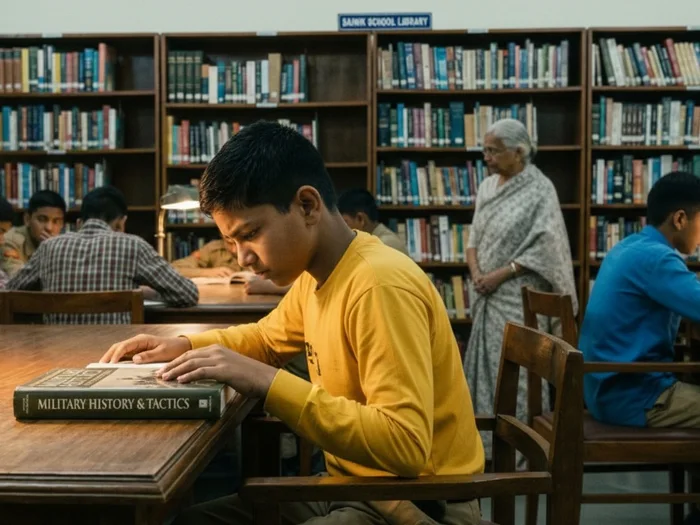
Malhotra ji came to see me in February. His son had just appeared for AISSEE. Results hadn't come yet.
"Sharma ji, I'm not worried about the written exam. He prepared well. But I keep thinking about the medical test. He wears glasses. He's been sitting at his desk for months. He put on some weight during preparation. What should I be doing right now while we wait for results?"
That's the right question to ask in February. Not in June when medical examination is a week away.
Most families think about medical preparation only after allotment is confirmed. By then, there's no time to fix anything. The issues that cause medical failures — eyesight deterioration, weight gain, untreated dental problems — all need months to address, not days.
Here is a complete, practical guide for preparing your child for Sainik School medical examination 2026. Starting now. Whatever month you're reading this.
The Timeline You Need to Understand
Written exam: January Results: March-April E-counselling: April-May Seat allotment: May Document verification: May-June Medical examination: June-July
That's 5-6 months between exam day and medical test day. More than enough time to prepare — if you start now. Zero time if you wait for allotment.
The families who walk into medical examination well-prepared started in February or March. The families who panic started in June.
Priority 1: Eyesight — The Most Critical Parameter
More children fail Sainik School medical examination due to eyesight than any other single reason.
The limit is -2.50 dioptre myopia in the worse eye. That's the line. -2.45 passes. -2.55 fails.
What you must do right now:
Take your child to an ophthalmologist — not a local optician, an actual ophthalmologist at a proper eye clinic or government hospital. Get a full refraction assessment with exact measurements.
What to ask for: spherical power for both eyes separately, cylindrical power for both eyes separately, visual acuity with and without correction.
Write down the exact numbers. Keep the prescription.
Interpreting what you find:
Power is -1.50 or less: Comfortable. Continue normal precautions.
Power is -1.50 to -2.00: Within limits but monitor. Start screen time management.
Power is -2.00 to -2.40: Borderline zone. Take this seriously. Heavy screen use can push this over -2.50 in 4-5 months. Specific protective measures needed now.
Power is -2.40 to -2.50: Very borderline. Any deterioration fails medical. Immediate action needed. Strict screen management. Re-check in 6 weeks.
Power is above -2.50: Exceeds limit. Get this confirmed at a government ophthalmology department. Understand the appeal process. Begin exploring options while also making alternative plans.
How to protect eyesight from deteriorating further:
Screen time is the primary driver of myopia progression in children. During the post-exam months — YouTube, games, phone, tablet — all accelerate deterioration.
Set specific limits: no more than 2 hours of recreational screen time daily. No screens in dark rooms. No phones within 30 cm of eyes. Take 20-second breaks every 20 minutes looking at something 6 metres away (the 20-20-6 rule).
Spend time outdoors daily. Natural light exposure is clinically shown to slow myopia progression. Even 45-60 minutes outside each day makes a measurable difference.
This is not inconvenient advice. For a child whose power is at -2.30 — these precautions could be the difference between passing and failing medical examination.
Priority 2: Weight and Physical Fitness
Medical examination checks that weight is proportionate to height. Neither significantly underweight nor significantly overweight.
Malhotra ji mentioned his son gained weight during preparation months. This is extremely common. Child sits studying for 6-8 hours daily. Less physical activity. Stress eating. By the time results come in March, many children are noticeably heavier than when they registered in September.
Medical examination is in June-July. That's 3-4 months from results. That's enough time to normalise weight if started immediately.
What to start today:
Minimum 45 minutes of physical activity daily. This doesn't mean gym or structured sports necessarily. Cycling, running, swimming, cricket, football, badminton — anything that gets the body moving properly.
Walking is not enough. 45 minutes of moderate-intensity activity — something that makes the child mildly breathless — that's the standard.
Why does this matter beyond weight? Because medical examination also assesses general physical fitness. A child who has been physically active for 3-4 months before examination presents differently to an examining doctor than one who has been sedentary. Stamina, posture, overall physical presentation — all of it is visible.
Nutrition side:
Reduce processed food and sugar during this period. Increase protein — eggs, dal, milk, chicken. Adequate vegetables. Proper meals rather than snacking.
This isn't about crash dieting. It's about returning to normal healthy eating after months of exam-stress food habits.
Priority 3: Dental Health
Dental issues are one of the most preventable medical examination failure reasons — and one of the most neglected.
Multiple untreated cavities, significant gum disease, active dental infections — these can be flagged at medical examination.
What to do:
Book dentist appointment this week. Not eventually — this week.
Dental check-up + X-ray to identify any cavities. Treat any active cavities. Clean teeth professionally. Address any gum health issues.
Dental treatment takes time. Multiple appointments. Some treatments need healing periods. Starting in February-March gives plenty of time to complete everything before June medical.
Starting in May leaves insufficient time. Don't let this be the reason.
Ongoing:
Proper brushing twice daily. Flossing. Reduce sugary drinks and snacks — particularly important for children who were stress-eating sweets during exam preparation.
Priority 4: Flat Feet and Knock Knees Check
Severe flat feet and severe knock knees can disqualify at medical examination.
How to check flat feet yourself:
Have your child stand barefoot on a flat, hard surface. Look at the inner side of each foot. A normal foot has a visible arch — a gap between the inner sole and the floor. If the entire inner sole touches the floor completely — that's significant flat feet worth having assessed.
Mild flat feet with some arch present — usually passes. Severe flat feet with no arch — typically disqualifies.
How to check knock knees:
Have child stand straight with feet together. Look at knees from the front. In normal alignment, knees are close together. In knock knees, knees come inward while ankles remain apart. Mild — usually passes. Severe (ankles more than 8-9 cm apart when knees touch) — tends to disqualify.
If you're concerned:
Get orthopedic consultation done. An orthopedic doctor assesses these conditions clinically. If the assessment shows the condition is mild or moderate and functional — you know in advance you'll likely pass. If severe — you know in advance and can plan accordingly, including understanding whether an appeal has any basis.
Priority 5: Ear Health
Make sure your child has no active ear infection or chronic ear condition unaddressed.
If child has had recurrent ear infections, perforated eardrum, or chronic discharge from either ear — ENT consultation is needed now.
Any active infection must be fully treated and healed before medical examination. Attending with active ear infection will result in a temporary or permanent finding.
For children with no ear history — routine check is optional but low risk either way.
Priority 6: General Health Maintenance
The 4-6 months between AISSEE exam and medical examination should be a period of restoring normal healthy routines after the intensive exam preparation phase.
Sleep: Regular 8-9 hours per night. Exam preparation often disrupts sleep. Restore normal sleep schedule.
Screen time: As mentioned for eyesight — reduce recreational screen time significantly.
Stress: Post-exam period can be anxious with result waiting. Maintain normal activities, hobbies, outdoor time. Don't let result anxiety create a sedentary, screen-heavy February-June period.
Illness management: If child develops any significant illness between results and medical examination — treat properly. Don't let an infection become chronic. Don't attend medical examination while actively unwell. Request rescheduling if genuinely ill on examination day.
Mental Preparation for Medical Examination Day
This part gets overlooked. Medical examination involves being examined by unfamiliar doctors. For an 11-12 year old, this can be anxiety-inducing.
Talk to your child in advance about what will happen:
"The doctors will check your height and weight, look at your eyes, check your teeth, look at your feet, listen to your heart and lungs. It takes about 30-45 minutes. It's not painful. The doctors are just making sure you're healthy and fit for residential school."
A child who knows what to expect is calmer. A calm child presents better during examination — better posture, better cooperation with the examination process, better overall impression.
Practice the basic examination elements at home. Stand straight. Walk normally. Follow instructions without anxiety.
What to Bring on Medical Examination Day
Documents:
- AISSAC allotment letter
- AISSEE admit card
- Medical call letter from school
- Existing spectacles prescription if child wears glasses
- Any specialist reports for known conditions (cardiologist clearance, orthopedic assessment, etc.)
Physical:
- Child should be wearing comfortable, easy-to-remove clothing. Examination requires removal of upper clothing for chest examination.
- Glasses if child wears them. Bring the case.
- Water bottle. Small snack if examination is long.
Mental:
- Arrive 20-30 minutes early. No rushed arrival.
- Child should have had good sleep night before. Light breakfast day of.
- Keep your own energy calm. Child mirrors parental anxiety.
The One Thing That Makes The Biggest Difference
All the preparation advice above matters. But there's one thing that makes more difference than anything else.
Start early.
A family that starts eyesight monitoring in February, physical activity in February, dental treatment in February — that family has 4-5 months to address anything that needs addressing.
A family that starts in June has days. Some things can't be fixed in days. Eyesight can't be corrected in 3 days. Dental work can't be completed in a week. Weight can't be normalised in two weeks.
The difference between a prepared child and an unprepared child at medical examination is almost entirely a function of when the family started. Not how much money they spent. Not how smart the child is. Just when they started.
For Sainik School entrance exam coaching that treats medical preparation as a genuine part of the overall strategy — not an afterthought — we work with families on the complete picture from the beginning.
Summary Action Plan
Do this week:
- Ophthalmologist appointment — get exact eye power measurements
- Dentist appointment — check and treat any issues
- Start 45 minutes daily physical activity
Do this month:
- Flat feet and knock knees self-check. Orthopedic if any concern.
- ENT check if any ear history.
- Establish healthy sleep routine.
- Reduce recreational screen time.
Continue until medical examination:
- Daily physical activity — no exceptions.
- Screen time management — especially important for borderline eyesight.
- Normal healthy meals.
- Regular dental hygiene.
One month before medical:
- Eye check again if power was borderline.
- Confirm dental treatment is complete.
- Ensure child is physically active and at healthy weight.
Week before medical:
- Good sleep every night.
- Normal routine — no disruptions.
- Brief child on what to expect at examination.
Day before:
- Light dinner. Early sleep.
- Documents prepared and kept together.
- Travel route confirmed.
Day of:
- Light breakfast.
- Arrive 20-30 minutes early.
- Stay calm. Child follows your energy.
Need specific guidance on any medical preparation aspect for your child? Contact us for honest, personalised support through every stage of Sainik School admission.
Want more information about Sainik School medical examination standards and admission process? Read our blog for complete parent guides on every stage.